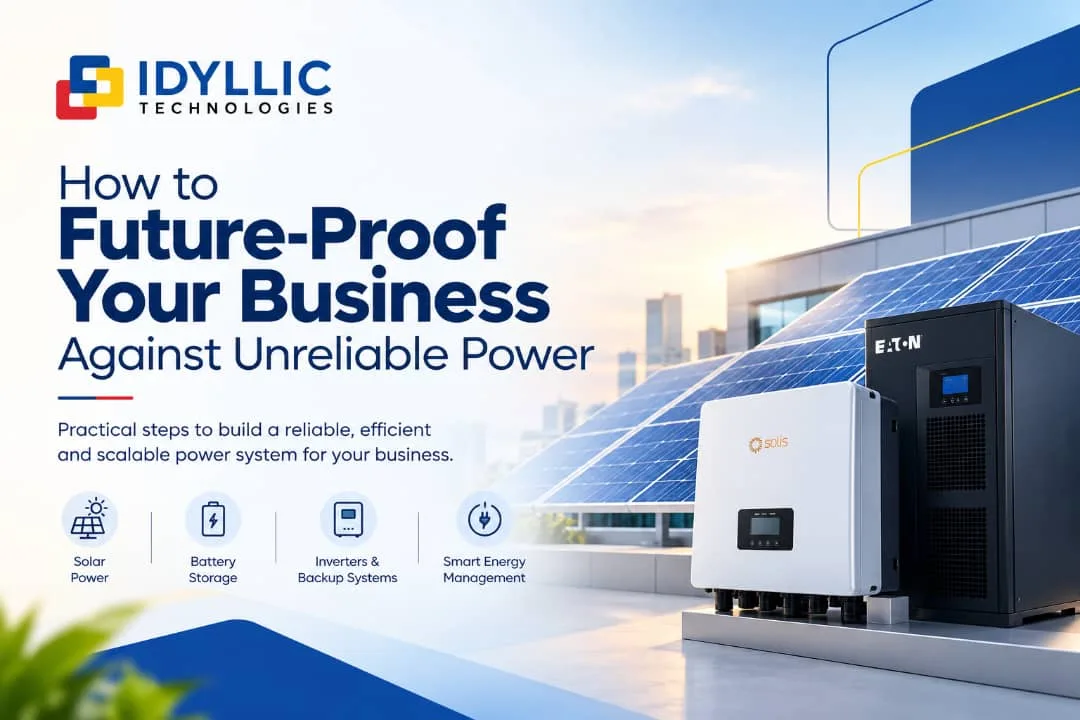
Your business should not have to stop every time the power goes out.
For many businesses in Nigeria, unreliable electricity is not just an inconvenience. It can mean interrupted operations, lost working hours, rising generator and fuel costs, equipment damage, delayed orders, and customers who are left waiting.
As businesses grow, their dependence on reliable electricity also grows. More equipment, more staff, more technology, longer operating hours, and higher customer expectations all require a dependable source of power.
This raises an important question:
What can your business do today to make sure unreliable power does not become a bigger problem tomorrow?
The answer is not simply to buy a larger generator or install an inverter without proper planning. Future-proofing your business means building a reliable power strategy that supports your current operations while giving you room to grow.
What Does It Mean to Future-Proof Your Business Against Unreliable Power?
Future-proofing your business means preparing your power system to handle both your current energy needs and your future demands.
Instead of constantly reacting to power outages, fuel price increases, or growing electricity consumption, your business can have a planned energy system designed around how it actually operates.
This may include a combination of:
Solar power
Solar inverters
Battery energy storage
Grid electricity
Generator backup
Energy monitoring and management
The right combination depends on the type of business, its operating hours, its equipment, its energy consumption, and how much backup power it needs.
The goal is simple: keep your business running reliably while reducing unnecessary energy costs and dependence on a single source of power.
Why Unreliable Power Is a Business Problem
It is easy to think about power outages as a technical problem. But for a business, the impact goes much further.
1. Power outages can reduce productivity
When electricity goes off, employees may be unable to work normally. Computers, internet equipment, production machines, refrigeration systems, pumps, and other essential equipment may stop working.
Even short interruptions can affect the flow of work.
If outages happen regularly, those lost minutes and hours can become significant losses over time.
2. Generator costs continue to add up
Generators can provide important backup power, but depending heavily on them can become expensive.
Businesses have to consider fuel, servicing, repairs, oil changes, replacement parts, and the cost of maintaining the generator itself.
As fuel and operating costs increase, relying on a generator as the main solution can put additional pressure on business expenses.
3. Unstable power can affect equipment
Some business equipment does not respond well to unstable electricity.
Sensitive electronics, computers, networking equipment, control systems, and other electrical devices can be affected by voltage fluctuations and poor-quality power.
Replacing damaged equipment can cost much more than preventing the problem in the first place.
4. Downtime can affect customers
Your customers may not care why your business is offline. They simply expect you to deliver.
If a power interruption delays production, prevents a payment system from working, stops refrigeration, interrupts communication, or delays an order, it can affect the customer experience.
Reliable power is therefore not only an energy issue. It is part of business continuity.
5 Ways to Future-Proof Your Business Against Unreliable Power
1. Start With a Clear Understanding of Your Power Needs
One of the biggest mistakes businesses make is choosing a power solution based only on the size of the inverter or the number of solar panels.
Your business needs more than a product. It needs a properly designed system.
Before investing in solar or backup power, you should understand:
Which equipment must remain powered during an outage
How much electricity your business uses
Which equipment consumes the most power
How long backup power is required
Your operating hours
Your current generator and electricity costs
How your energy needs may change as the business grows
This is why a power assessment should come before system installation.
A proper assessment helps determine the right combination of inverter capacity, solar panels, battery storage, and other power sources for your business.
2. Reduce Your Dependence on Generators
Generators may remain useful as part of a broader backup strategy, but businesses do not necessarily have to depend on them for every power interruption.
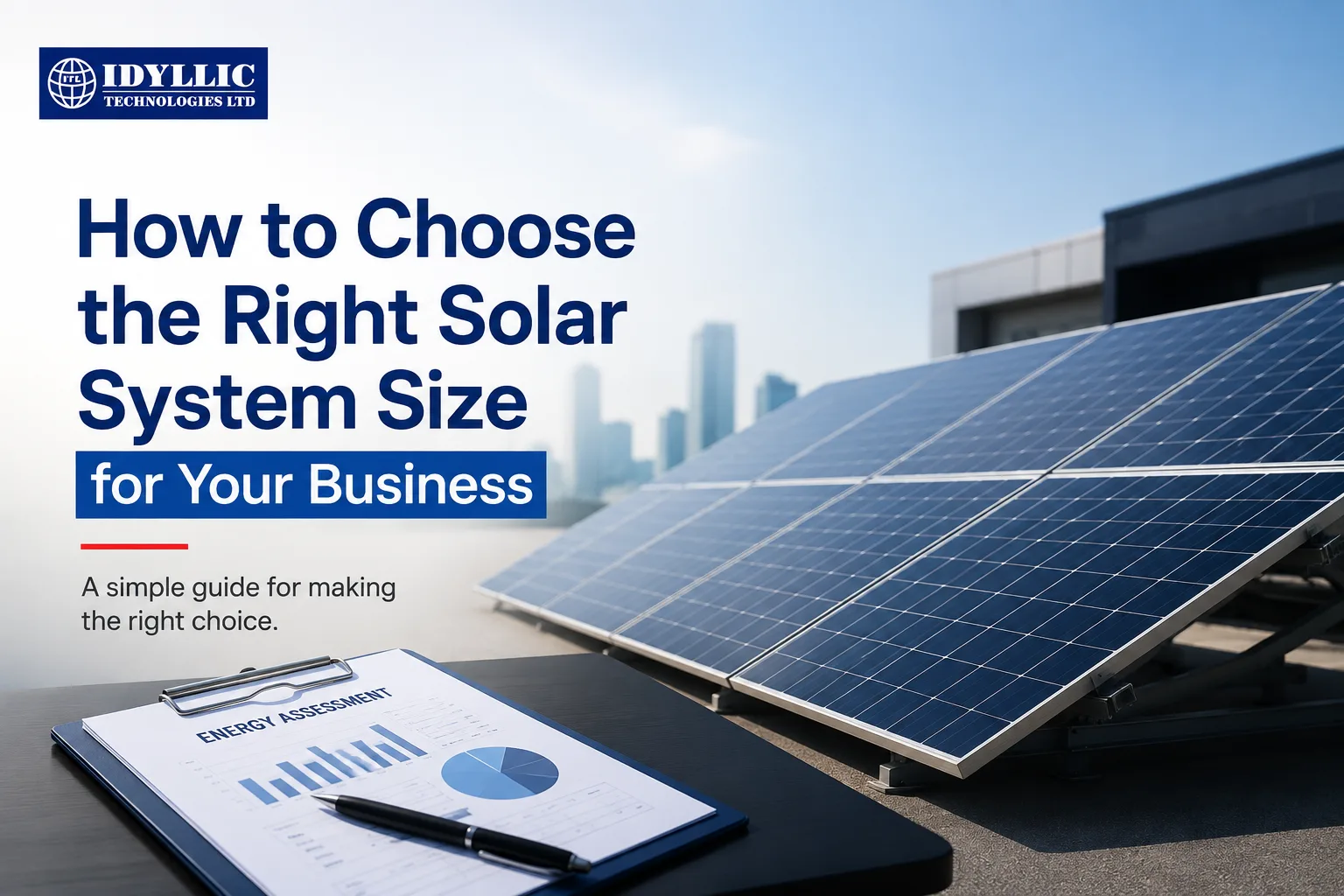
A properly designed commercial solar system with battery storage can provide an alternative source of electricity for critical business loads.
During the day, solar panels can generate electricity from sunlight. Depending on the system design, excess energy can be stored in batteries for later use.
This can reduce how often the generator needs to run and help lower fuel consumption.
For businesses that operate for long hours, this can make a significant difference to operating costs over time.
3. Invest in the Right Solar Inverter and Battery System
The inverter is one of the most important parts of a solar power system because it manages how electricity moves between the solar panels, batteries, grid, and your business loads.
But the biggest or most expensive inverter is not automatically the best choice.
Your system needs to match your actual requirements.
A properly selected solar inverter should be able to support your expected loads and work effectively with the rest of the system.
Battery storage is equally important for businesses that need power when solar generation is low or when the grid goes down.
The right battery capacity depends on how much energy your business needs and how long you want selected equipment to operate during an outage.
The objective is not simply to install a large system. It is to install the right system.
4. Plan for Business Growth
A power system that works for your business today may not be enough two or three years from now.
Perhaps you plan to add more computers, air conditioners, refrigeration equipment, production machines, offices, or operating hours.
If your energy system is designed without considering future growth, you may have to make major changes sooner than expected.
A future-ready system should therefore consider where your business is going—not only where it is today.
This does not necessarily mean paying for a system you do not currently need.
Instead, it means designing the system intelligently so that future expansion can be considered from the beginning.
5. Monitor How Your Business Uses Energy
You cannot manage what you do not understand.
Energy monitoring can help businesses identify how and when electricity is being consumed.
This can reveal opportunities to reduce unnecessary consumption, improve the use of stored energy, and make better decisions about power generation.
Modern energy systems can also provide monitoring and management features that give businesses greater visibility into their power usage.
For a growing business, this information can become an important part of controlling energy costs.
Why Simply Buying a Bigger Inverter Is Not Enough
It can be tempting to think that the solution to unreliable power is simply buying a bigger inverter.
But an inverter is only one part of a complete energy system.
If the battery is too small, backup time may be limited.
If the solar array is poorly sized, the system may not generate enough energy.
If the loads are not properly assessed, important equipment may be left without adequate backup.
And if the system is not designed around how your business operates, you may spend more without getting the reliability you expected.
Good energy planning comes before equipment selection.
That is why businesses should work with a renewable energy company that looks at the complete picture rather than simply recommending a product.
How Solar and Battery Storage Can Strengthen Business Continuity
For many businesses, solar energy can be more than a way to reduce electricity bills.
When properly designed, a solar and battery system can become part of a wider business backup power solution.
Solar can help generate electricity during the day, while battery storage can provide energy when solar production is unavailable or when the grid fails.
Depending on the system, businesses can also integrate grid electricity and generator backup to create a more flexible energy setup.
This approach can help businesses reduce their dependence on any single power source.
The result is a power strategy designed around reliability, efficiency, and continuity.
The Right Power Solution Should Fit Your Business
There is no single solar system that is right for every business.
A small office will have different requirements from a supermarket.
A hotel will have different loads from a manufacturing facility.
A hospital, school, restaurant, warehouse, or retail business will each have its own critical equipment and operating requirements.
That is why choosing a business backup power solution should start with the business itself.
At Idyllic Technologies, we believe the right energy solution begins with understanding how your business uses power.
We help businesses assess their energy requirements and identify suitable renewable energy and backup solutions based on their operations, current needs, and future plans.
Whether the objective is to reduce generator dependence, improve power reliability, manage energy costs, or build a more resilient energy system, the solution should be designed around the business—not the other way around.
Future-Proofing Your Business Starts With Better Power Planning
Unreliable electricity does not have to determine how your business operates.
The businesses that prepare early are better positioned to manage power interruptions, control energy costs, protect operations, and support future growth.
Future-proofing does not mean eliminating every challenge with electricity overnight.
It means taking a smarter approach:
Understand your energy needs.
Plan for growth.
Reduce unnecessary dependence on generators.
Use solar and battery storage where appropriate.
Monitor your energy consumption.
Build a power system that can evolve with your business.
Most importantly, do not wait until another major power problem forces you to act.
Your business needs a power solution that works not only for today, but also for where you are going.
Ready to Build a More Reliable Power System for Your Business?
At Idyllic Technologies, we provide tailored solar and backup power solutions for businesses in Nigeria, helping organisations take control of their energy needs and build more reliable operations.
If unreliable power is affecting your business, the first step is understanding exactly what your business needs.
Talk to Idyllic Technologies about a power assessment and discover the right energy solution for your business.