For many businesses, the power question is no longer simply, “Is there electricity?”
It is:
“Can we keep the business running when the grid is unavailable?”
A power interruption can mean stopped production, idle staff, interrupted internet access, spoiled products, delayed customers, or equipment that cannot operate when needed.
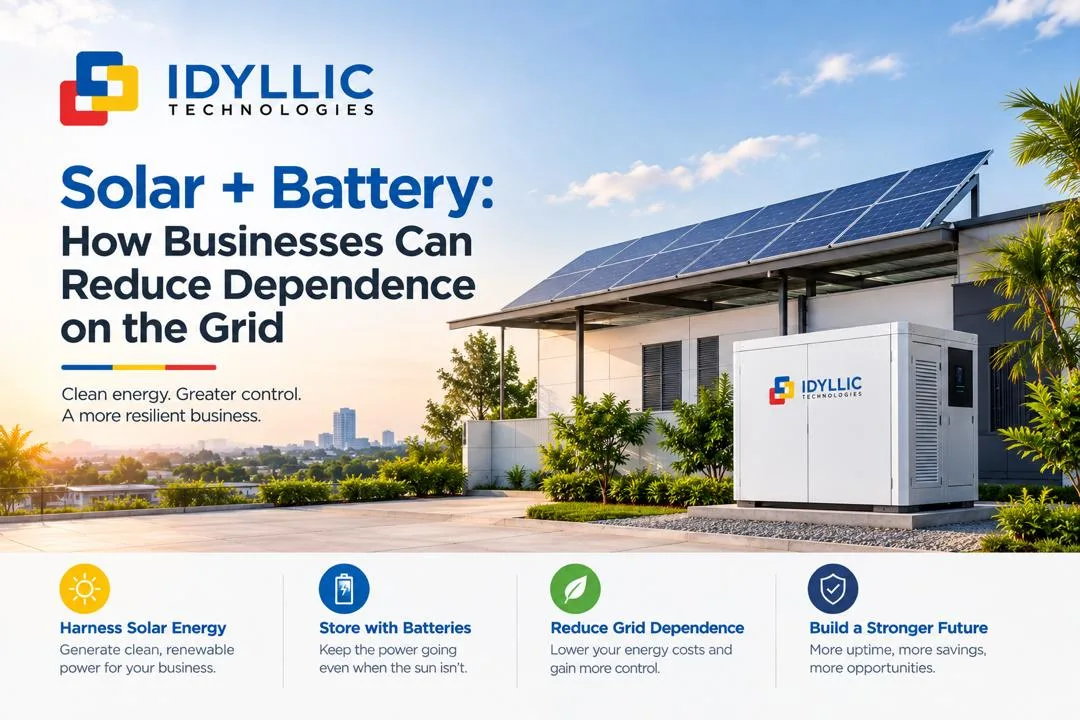
This is why more businesses are looking beyond the grid alone and considering a combination of solar power and battery storage.
Solar panels can generate electricity during the day. Batteries can store energy for use when solar generation is low or when the grid goes off. Together, they can give businesses more control over how and when they use energy.
But solar and battery storage are not simply about installing panels on a roof and adding batteries somewhere in the building.
The real question is:
How can a solar and battery system fit the way your business actually operates?
That is what matters when the goal is to reduce dependence on the grid and build a more reliable power system.
Why Businesses Are Looking Beyond the Grid
The grid can be an important part of a business’s power supply, but relying on it as the only source of electricity can create challenges.
When power goes off, the business has to find another way to keep essential operations running.
For some businesses, that may mean switching to backup power. For others, it may mean shutting down equipment, waiting for electricity to return, or changing the way the business operates.
The problem is not only the outage itself.
It is what happens because of the outage.
A restaurant may have to keep refrigeration running.
A hotel needs lighting, water pumps, security systems, internet and other essential services.
A manufacturing business may need to keep production equipment operating.
An office may depend on computers, servers, internet connections, air conditioning and security systems throughout the working day.
When power interruptions become part of normal business operations, the cost can go beyond the electricity bill.
This is where a properly designed solar and battery solution can become part of a broader business energy strategy.
How Solar and Battery Storage Work Together
The easiest way to understand a solar and battery system is to look at the role each part plays.
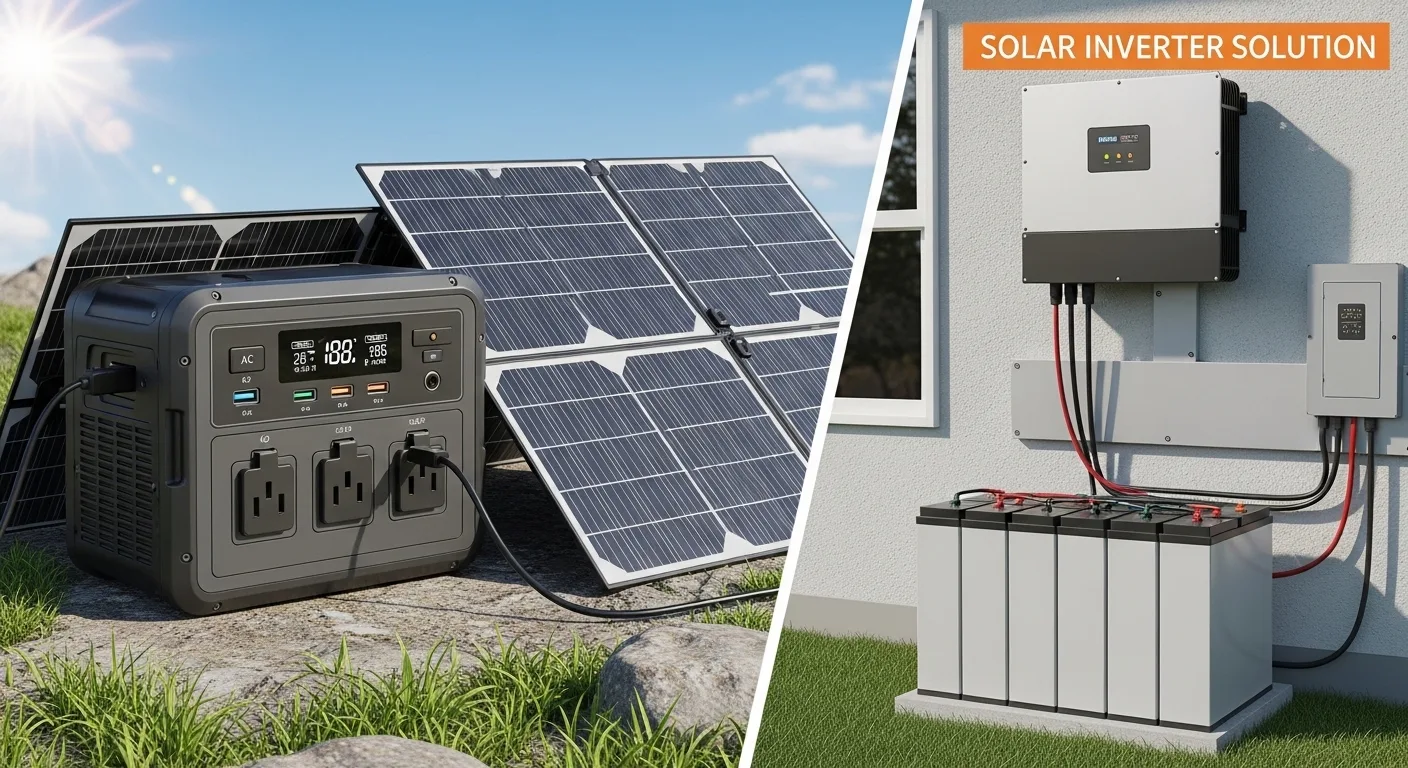
Solar panels generate electricity.
During periods of sunlight, the panels produce energy that can be used by the business.
The inverter manages and converts the electricity.
It helps the system deliver usable power to the business and manages how energy moves between the solar panels, battery, grid and connected loads, depending on the system design.
The battery stores energy.
Instead of using all the solar energy immediately, excess energy can be stored and made available when it is needed later.
This creates more flexibility.
For example, a business may generate solar power during the day while the sun is available. Some of that energy can run the business directly, while excess energy can be stored.
Later, when solar production drops or the grid becomes unavailable, stored battery energy can help supply selected loads.
The exact way this works depends on the system design, equipment, battery capacity, load requirements and operating pattern of the business.
The important point is that solar and battery storage solve different parts of the power problem, but work together as one energy system.
Solar Alone May Not Solve Every Business Power Challenge
Solar power can significantly reduce the amount of electricity a business needs from the grid during periods when solar generation is available.
But what happens when the sun is not producing enough energy?
This is where battery storage becomes important.
Without sufficient storage, a business may still need to depend heavily on another power source when solar generation is low.
With a battery system, some of the energy generated earlier can be stored for later use.
That does not mean every business needs a large battery bank.
The right battery capacity depends on what the business needs to keep running, how long backup is required, when energy is used, and how the solar system is designed.
This is why the conversation should not start with:
“How many solar panels should we install?”
It should start with:
“How does our business use power, and what do we need the system to do?”
What Does Reducing Dependence on the Grid Actually Mean?
Reducing dependence on the grid does not necessarily mean disconnecting from it completely.
For many businesses, the goal is to have more control over where their energy comes from and how it is used.
Think about a business that operates during the day.
If solar can supply a significant part of its daytime energy needs, the business may need less grid electricity during those periods.
If excess solar energy is stored in batteries, that stored energy can potentially support selected loads later.
If the grid goes off, the battery can provide backup for the loads the system has been designed to support.
This creates a more flexible energy setup.
Instead of the business being completely dependent on one source, the system can combine different sources according to the business’s needs.
That is the real value of a well-designed solar and battery solution.
What Can a Solar + Battery System Help a Business Achieve?
The benefits will differ from one business to another, but a properly designed system can support several important business goals.
1. Greater Power Reliability
A business does not always have control over when the grid goes off.
A solar and battery system can provide another source of energy for selected operations, helping the business continue running during interruptions.
This can be particularly important for equipment and services that should not simply switch off whenever grid power is unavailable.
2. Better Control of Energy Use
Solar allows a business to generate some of its own electricity rather than depending entirely on purchased electricity.
Battery storage adds another layer of control by allowing energy to be stored and used later.
This gives businesses more flexibility in managing their energy throughout the day.
3. Reduced Dependence on Backup Power Sources
Many businesses use backup power when the grid is unavailable.
Solar and battery storage can reduce the need to rely on backup sources for every interruption, depending on the system design and the business’s energy requirements.
This can be especially useful for businesses looking to develop a more structured long-term energy strategy.
4. Protection of Critical Operations
Not every electrical load in a business has the same level of importance.
A business may have equipment that must stay on while other loads can be switched off temporarily.
A power assessment can help identify these critical loads and determine how the solar and battery system should be designed around them.
This means the goal is not simply to “power everything.”
It is to make sure the right things stay powered when they matter most.
Not Every Business Needs the Same Solar + Battery System
This is one of the most important things to understand before investing in commercial solar.
A small office, supermarket, hotel, factory and healthcare facility may all use electricity differently.
Even two businesses with similar electricity bills may have very different power requirements.
One may use most of its energy during the day.
Another may have significant evening or night-time loads.
One may depend on a few large machines.
Another may have many smaller loads operating at the same time.
This is why copying another business’s solar system is not necessarily the right approach.
The system should be based on your business’s actual energy requirements and operating pattern.
What Should Be Considered Before Installing Solar and Battery Storage?
Before investing in a solar and battery system for your business, there are several questions worth answering.
What equipment needs to run?
List the equipment and electrical loads that are important to your daily operations.
This could include production machines, refrigeration, computers, air conditioning, pumps, lighting, security systems, networking equipment or other business-critical loads.
Which loads are critical?
If there is a power interruption, what absolutely needs to stay on?
This helps determine what the backup system needs to support.
When does your business use the most electricity?
Does most of your energy consumption happen during the day?
Do you operate late into the evening?
Do your energy needs change between weekdays and weekends?
Understanding your operating pattern is important when designing both solar generation and battery storage.
How long does backup need to last?
There is a difference between keeping essential equipment running for a short interruption and supporting critical operations for several hours.
Battery capacity should be considered based on the loads that need backup and the required duration.
Is the business expected to grow?
This question is often overlooked.
If you plan to add equipment, increase production, extend operating hours, move into a larger facility or expand your operations, your future energy needs may be different from today’s needs.
That does not mean you need to buy the biggest system available.
It means your future plans should be part of the conversation.
Solar + Battery Should Be Designed Around the Business
The best starting point for a business solar project is not always the equipment.
It is the business.
What does the business do?
When does it operate?
What equipment does it depend on?
What happens when power goes off?
Which loads are critical?
What are the business’s plans for growth?
Once these questions are understood, the technical solution becomes easier to define.
The size of the solar array, inverter capacity, battery storage and other components can then be considered based on the actual requirements.
This approach helps prevent two common problems.
The first is under-sizing, where the system cannot support what the business needs.
The second is over-sizing, where the business pays for capacity it may not actually need.
The goal is not simply to install more equipment.
The goal is to create a power solution that makes sense for the business.
What About the Grid?
Solar and battery storage do not necessarily have to replace the grid.
In many business applications, the grid can remain part of the overall energy system.
The solar system can generate power when available.
The battery can store energy for later use.
The grid can provide electricity when needed, depending on the system configuration.
This creates an energy mix where the business is not forced to rely entirely on one source.
The exact operating strategy depends on the business, the equipment selected and how the system is configured.
This is why professional system design matters.
The Bigger Goal Is Business Continuity
It is easy to think about solar in terms of panels, batteries and inverters.
But for a business, the bigger conversation is about continuity.
What happens to the business when electricity is unavailable?
Can employees continue working?
Can equipment remain operational?
Can refrigeration continue?
Can customers still be served?
Can important systems remain connected?
Can the business operate without constantly changing its plans around power availability?
A reliable energy solution should support the business rather than become another thing the business has to manage every day.
That is why solar and battery storage should be viewed as part of a business’s energy strategy, not simply as another piece of equipment.
Is Solar + Battery Right for Your Business?
There is no single solar and battery system that is right for every business.
The right solution depends on your energy consumption, operating hours, critical loads, backup requirements, available space, future plans and other site-specific factors.
What matters is understanding those requirements before making an investment.
If your business is already spending significant time and money dealing with unreliable power, it may be worth looking at the bigger picture.
Instead of asking only:
“How much will a solar system cost?”
Ask:
“What would a more reliable and better-managed power system mean for the way my business operates?”
That question can lead to a much more useful conversation.
Build a Power System That Works With Your Business
Reducing dependence on the grid is not simply about producing your own electricity.
It is about having a power system that is designed around your business and gives you more control over how energy is generated, stored and used.
Solar can help generate power.
Battery storage can help save energy for when it is needed.
An appropriately designed inverter and energy management system can help coordinate these components.
Together, they can form a smarter and more flexible power solution for businesses.
At Idyllic Technologies, we believe the right energy solution starts with understanding the business behind the power demand.
Before recommending a solar and battery system, it is important to understand what your business needs today, what must stay powered, how your energy is used and where the business is going.
If you are looking to reduce dependence on the grid, improve power reliability, support critical operations or prepare your business for future energy needs, the first step is understanding your power requirements.
Your business should not have to plan its operations around unreliable power. Your power system should be planned around your business.
Talk to Idyllic Technologies about your business’s power needs and explore a solar and battery solution designed around the way you operate.