
“This battery is fake.”
“It didn’t even last two years.”
“The quality is poor.”
These are some of the most common complaints businesses make when their backup batteries fail.
But here’s the uncomfortable truth:
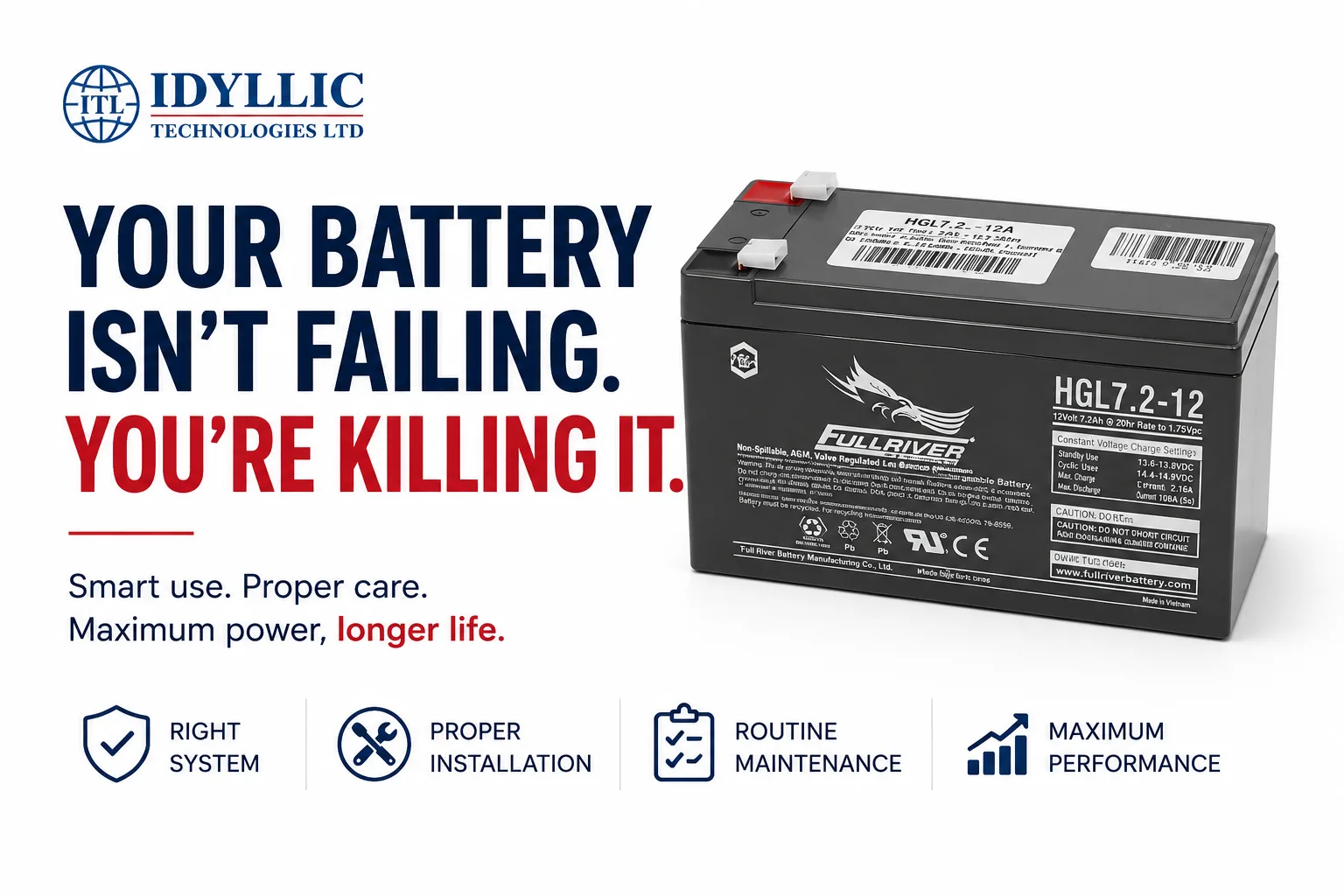
In many cases, the battery isn’t the problem. The way it’s being used is.
It’s easier to blame the manufacturer than to admit that poor usage, poor installation, or poor maintenance may have caused the failure. Yet every year, businesses spend millions replacing batteries that should still have years of life left in them.
The real culprit isn’t always the battery.
It’s what happens after it’s installed.
The Silent Battery Killer Nobody Talks About
Most business owners believe a battery has one job: provide backup power when electricity goes off.
Technically, that’s true.
But a battery is designed to operate within specific conditions. When those conditions are ignored, its lifespan begins to shrink—sometimes dramatically.
Imagine buying a brand-new vehicle and never changing the engine oil. When it eventually breaks down, would you blame the manufacturer?
The same principle applies to backup batteries.
Unfortunately, many businesses unknowingly shorten battery life through everyday operational habits.
Five Mistakes That Destroy Batteries Faster Than Time
1. Draining the Battery Completely
Many businesses allow their batteries to discharge to extremely low levels every day before recharging.
Deep discharge may seem harmless, but doing it repeatedly puts enormous stress on the battery and significantly reduces its lifespan.
Backup power is meant to protect your operations—not to be pushed to its absolute limit every single day.
2. Overloading the Backup System
A battery can only deliver the amount of power it was designed to support.
Connecting more equipment than the system was designed for forces the battery to work harder than it should.
The result is excessive heat, reduced efficiency, and premature failure.
3. Poor Installation
Even the highest-quality battery cannot compensate for poor installation.
Incorrect cable sizing, loose terminals, poor ventilation, or an improperly configured inverter can reduce performance from the very first day.
The quality of the installation is just as important as the quality of the battery itself.
4. Heat Is the Enemy
One of the fastest ways to destroy a battery is exposing it to excessive temperatures.
Many batteries are installed in poorly ventilated rooms where heat builds up continuously.
High temperatures accelerate chemical degradation inside the battery, shortening its useful life.
5. Buying Based Only on Price
This is perhaps the most expensive mistake of all.
Choosing the cheapest battery without considering your actual power requirements often leads to frequent replacements, poor performance, and higher long-term costs.
A battery should be selected based on your load, backup time requirements, charging system, and operating environment—not just its price tag.
The Hidden Cost Isn’t the Battery
When a battery fails, most people focus on the replacement cost.
But that’s only part of the expense.
A failed backup system can mean:
Business operations stop unexpectedly.
Servers and networking equipment shut down.
Security systems go offline.
Productivity drops.
Customers experience delays.
Emergency replacement costs increase.
In many cases, these hidden costs are far greater than the price of the battery itself.
The Businesses That Spend Less Think Differently
Successful businesses rarely ask:
“What’s the cheapest battery available?”
Instead, they ask:
Is this the right battery for our application?
Is the inverter properly matched?
Is the charging system configured correctly?
Is the installation being handled by professionals?
Do we have a maintenance plan?
These questions don’t just extend battery life—they reduce downtime, lower operating costs, and improve business continuity.
Reliable Backup Power Is More Than Just Buying a Battery
A battery should never be viewed as a standalone product.
It is one part of a complete backup power system.
Even a premium battery can fail prematurely if it’s poorly installed, overloaded, or neglected. On the other hand, the right battery—paired with the right system design and proper maintenance—can deliver dependable performance for years.
That’s why businesses should focus on the entire solution, not just the battery itself.
Final Thoughts
The next time a battery fails earlier than expected, don’t ask only, “Was it a good battery?”
Also ask:
Was it correctly sized?
Was it properly installed?
Was it adequately maintained?
Was it being used as intended?
The answers to those questions often reveal the real reason behind premature battery failure.
At Idyllic Technologies, we help businesses design reliable backup power systems that go beyond simply supplying batteries. From proper sizing and professional installation to long-term maintenance, our goal is to help you get the maximum value and lifespan from your investment—because reliable power starts with making the right decisions long before the lights go out.